
 CASLT Event


Description
How can we teach a language in which grammatical gender is ubiquitous while creating a space where every student feels acknowledged? This webinar will present the results of research conducted with teachers and students on inclusive practices related to gender and sexuality in French as a second language (FSL) teaching. We will explore the challenges faced by teachers, from gender agreement to non-binary pronouns such as “iel,” as well as the representation of sexual and gender diversity in instructional materials. We will then share concrete practices and resources that are easy to integrate into the classroom, regardless of student proficiency levels. This webinar is intended for FSL teachers who wish to reflect on their practices and make their classrooms more inclusive while supporting their students’ language development.
Time & Date
 December 1, 2026
 7:00 p.m. - 8:00 p.m. EST
Location
Zoom
Presenters
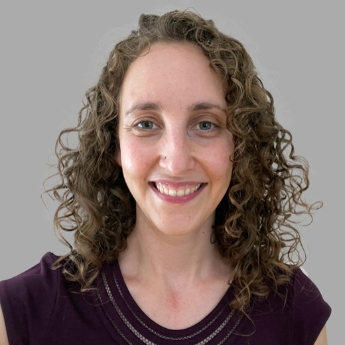
Assistant Professor of French Education and Teacher Education, University of British Columbia
Julia Spiegelman
Julia Donnelly Spiegelman (she/elle) is a critical applied linguist, researcher, and anti-bias teacher educator whose research amplifies the language learning experiences of nonbinary adolescents to inform and advocate for gender-expansive language classrooms. A former middle school French teacher in the Boston area, she now serves as Assistant Professor of French Education and Teacher Education at the University of British Columbia. Julia has taught languages and language pedagogy for fifteen years in Canada, the United States, and Europe in contexts ranging from K-12 to higher education, specializing in identity-conscious, anti-bias, and queer approaches to teacher education.
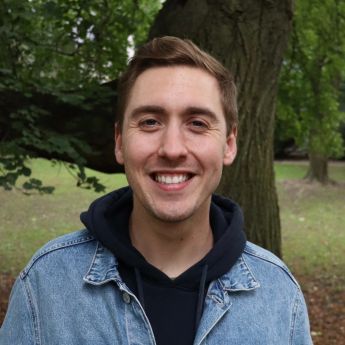
Lecturer and coordinator of French pathways, University of British Columbia
Robert Grant
Dr. Robert Grant (he/him) is a lecturer and coordinator of French pathways at the University of British Columbia – Okanagan campus. His research focuses on inclusion in French as an additional language settings, specifically how queer, trans, and/or nonbinary French teachers navigate language and identity in their work. Rob worked as a secondary teacher in Toronto before moving to BC.
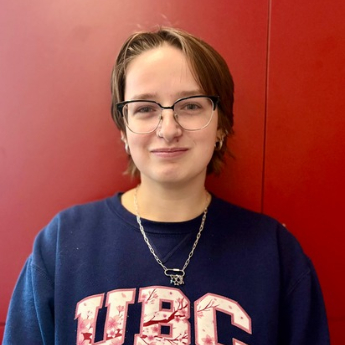
Bachelor of Education student, University of British Columbia
Kenny Krulic
Kenny Krulic (she/they/he) is finishing his Bachelor of Education at the University of British Columbia – Okanagan campus, located on Syilx territory. Kenny has worked IN numerous positions in the Official Languages Programs in Quebec and New Brunswick. Before post-secondary studies, Kenny’s FSL education involved exploration of Francophone identities within Canada, but eschewed queer identities within French language and Francophone communities. As a result, Kenny has consistently made explicit intention to teach about queering French language in FSL environments in their past and current teaching experience, prioritizing student identity and community.

Teacher at the Francophone School Board of British Columbia
EJ Rush
EJ Rush (they/them) teaches with the Francophone School Board of British Columbia, provides community translation services, and advocates for linguistic justice. Growing up on the territories of the xʷməθkʷəy̓əm (Musqueam), Sḵwx̱wú7mesh (Squamish), and səlilwətaɬ (Tsleil-Waututh) Nations, they learned a Eurocentric version of French without exposure to critical reflection on the cultural dimensions of how language represents social identities. Recognizing that schools often reproduce a heteropatriarchal model of language, EJ works with young people to challenge the stigmatization of difference and strengthen linguistic agency.
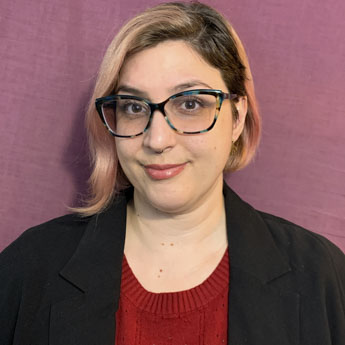
Associate professor, Faculty of Education, University of Sherbrooke
Mimi Masson
Mimi Masson (she/elle) is an associate professor in the Faculty of Education at the University of Sherbrooke, where she teaches French pedagogy and English as a Second Language. Her research draws on arts-based methodologies to explore teacher identity and professional learning in areas such as anti-racist and inclusive educational practices.


