
Session Information
 October 16, 2026
 All day
 Bilingual
 CASLT Event
Description
CASLT holds its Annual General Meeting (AGM) and Networking Day each fall. The event is an opportunity for CASLT members, partners, and stakeholders in language education to discuss important updates, network, and share ideas.
CASLT’s 2026 AGM and Networking Day will take place on Friday, October 16 at the Sheraton Ottawa Hotel. The registration fee is $35.
RegisterEvent Details and Documents
Sponsors
Thank you to the sponsors of our 2026 AGM and Networking Day.

Location
Keynote Speaker

Professor and Chair, Leadership, Policy, and Governance, University of Calgary
Dr. Sarah Elaine Eaton
Sarah Elaine Eaton, PhD, is a professor in the Werklund School of Education at the University of Calgary and an honorary associate professor at Deakin University in Australia. Her teaching and research focus on ethics and integrity in educational contexts, with recent funded projects on postplagiarism pedagogy, ethical AI integration in education, and academic integrity in online and graduate programs. She is editor-in-chief of the International Journal for Educational Integrity and has led and contributed to numerous books on academic integrity, ethics, and teacher education.
Panel

Associate Professor, Université de Sherbrooke
Philippa Parks (Moderator)
Philippa Parks serves as program coordinator for internships for the Qualifying Master’s program (MQES) in the Faculty of Education at the Université de Sherbrooke. Her research examines the intersections of language teacher identity, self-efficacy, and resilience during teacher education, with particular emphasis on how pre-service teachers navigate linguistic and professional identities within Quebec’s sociocultural context. In her work with preservice ESL teachers, she explores how future teachers can integrate AI into their practice ethically and critically, helping them develop approaches they can model for their own students. Her recent publications examine ESL teachers’ linguistic identity negotiation and the role of collaborative professional communities in teacher resilience. She also holds leadership positions on the executive boards of CASLT and CATE.
Professor, University of Calgary
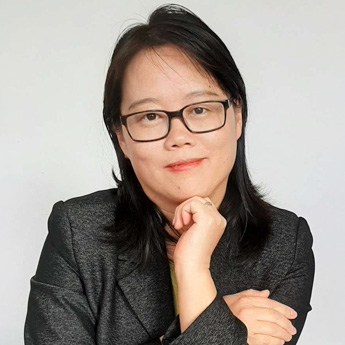
Wei Cai
Wei Cai is a professor in the School of Languages, Linguistics, Literatures and Cultures at the University of Calgary and the Director of the Graduate Program in Languages, Literatures and Cultures. She previously served as Chair of the Division of Chinese Studies and Japanese Studies, Director of the Language Research Centre, and President of the Chinese Language Teaching and Research Association. Her main research interests include second language listening, second language acquisition, artificial intelligence in language teaching and learning, and teacher education. Wei received the Robert Roy Award from CASLT in 2023, and the Leadership and Mentorship Award from the University of Calgary’s Faculty of Arts in 2025. Her book Teaching and Researching Chinese Second Language Listening was published by Routledge (Taylor & Francis Group) in 2022. The edited volume Researching and Teaching the Chinese Language: Voices from Canada was published by Springer in 2024. Her forthcoming book, Using Artificial Intelligence in Language Education, will be published by Bloomsbury.

Program Coordinator, Edmonton Public Schools
Stephanie Jackson
Stephanie Jackson is an educator with Edmonton Public Schools. She has worked as a French teacher, consultant, and program leader. Stephanie is passionate about language learning, technology, and helping teachers create engaging and inclusive classrooms. She enjoys supporting educators in areas such as language teaching, assessment, and technology integration and has contributed to a variety of educational initiatives through both her professional and volunteer work.

PhD Candidate in Education, Université de Sherbrooke
Anne-Marie Sénécal
Anne-Marie specializes in the use of AI in language education. Her doctoral research explores how plurilingual graduate students use AI tools for academic writing in an additional language while negotiating human agency and linguistic identity. She contributed to the 2026 revision of the Ministry of Education of Quebec’s Digital Competency Framework, reflecting her engagement with emerging issues in education, technology, and AI. Anne-Marie’s work brings together experience in research, teacher education, and English language instruction.