
Session Information
 January 30, 2026
 10:00 a.m. - 3:15 p.m. EST
 Bilingual
 CASLT Event
 Description
Registration is now closed.
CASLT’s Virtual PL Days provide a platform for teachers to connect with colleagues, engage in interactive professional learning opportunities, and share best practices. Our experienced team of professional learning facilitators will explore research-informed teaching approaches and strategies to inspire, motivate, and challenge teachers to improve their practice. The sessions will be recorded and participants will also leave each workshop with a ready-to-use teacher tool.
Registration Options
Multiple registration options are available to accommodate scheduling and budgetary constraints:
| Option | Member Price | Student Member Price | Non-Member Price* |
| Full day (10:00 a.m. to 3:15 p.m. ET) | $90 + tax | $50 + tax | $120 + tax |
| Half day AM (10:00 a.m. to 12:30 p.m. ET) | $50 + tax | $30 + tax | $80 + tax |
| Half day PM (12:45 p.m. to 3:15 p.m. ET) | $50 + tax | $30 + tax | $80 + tax |
*Includes a one-year CASLT membership.
Schedule
Each Virtual PL Day will include two streams (one in English and one in French) of four 60-minute workshops. Full day registration includes access to all four workshop blocks, and half day registration (either AM or PM) includes access to two workshop blocks.
| Start Time* | End Time* | Description | |
| 10:00 a.m. | 10:15 a.m. | Welcome and Introduction (Full day or Half day AM registrants) | |
| 10:15 a.m. | 11:15 a.m. | Shifting Perspectives: Centring Student Voices, Identity, and CRRP
Presenters: Karen Devonish-Mazzotta and Cécile Robertson Language: English |
Helping Students Build Their Identity Through Intercultural Experiences
Presenter: Carl Ruest Language: French |
| 11:15 a.m. | 11:30 a.m. | Break | |
| 11:30 a.m. | 12:30 p.m. | Living Language: Weaving Indigenous Languages and Ways of Knowing
Presenters: Gemma Porter and Shirley Cardinal Language: English |
When Language Resonates: Music as a Cultural Speaker
Presenter: Shauna Néro Language: French |
| 12:30 p.m. | 1:00 p.m. | Break (Full day registrants) | |
| 12:45 p.m. | 1:00 p.m. | Welcome and Introduction (Half day PM registrants) | |
| 1:00 p.m. | 2:00 p.m. | Tomorrow’s Tools Today: Using AI in the Additional Language Classroom
Presenter: Stephanie Jackson Language: English |
The Role of the Home Language in the L+ Classroom
Presenter: Monica Tang Language: French |
| 2:00 p.m. | 2:15 p.m. | Break | |
| 2:15 p.m. | 3:15 p.m. | Creating and Integrating Games Into Language Teaching
Presenter: Charlotte Crober Language: English |
Feedback Worth Giving
Presenter: Marc-Albert Paquette Language: French |
* Eastern Standard Time
Session Descriptions
English Sessions
Shifting Perspectives: Centring Student Voices, Identity, and CRRP
Karen Devonish-Mazotta and Cécile Robertson
To better engage additional language (L+) learners, educators must shift their attention to centring student voice, interest, agency, and identity. When students have more opportunities to see themselves in the L+ classroom and to make meaningful and relevant connections with their lived experiences, L+ learning becomes an opportunity to explore and apply language in transformative ways.
During this workshop, participants will reflect on their social identities and how these inform their practice, L+ pedagogy, and learning. A juxtaposition between Culturally Relevant and Responsive Pedagogy (CRRP), Intercultural Understanding and Awareness (IUA), and curriculum will provide an opportunity to explore anti-oppressive teaching strategies and highlight the importance of critical consciousness in all aspects of L+ policy, practice, teaching, and learning.
Living Language: Weaving Indigenous Languages and Ways of Knowing
Gemma Porter and Shirley Cardinal
Drawing from two courses developed for CASLT (Understanding Decolonization and Indigenization and Diversity of Indigenous Languages), this session aims to explore the essential relationship between Indigenous languages and Indigenous ways of knowing. Using pedagogies of story, lands, and relational reflexivity, participants will be guided in experiencing how Indigenous languages are deeply intertwined with ways of knowing and being in the world.
Participants will engage in interactive activities that highlight moving beyond the relationship between language and cultural identity to consider how language is foundational to relational ways of knowing and being. By the end of the session, attendees will have gained insights into the importance of preserving and revitalizing Indigenous languages as central to processes of decolonization and promoting educational equity.
Tomorrow’s Tools Today: Using AI in the Additional Language Classroom
Stephanie Jackson
Curious about how AI can help you save time and spark creativity in your language classroom? This hands-on workshop will explore practical ways teachers can use AI for lesson planning, creating resources, and supporting instruction, all while keeping the human touch front and centre. Participants will discover free AI tools that can generate lesson plans, sample texts, and visuals in the target language. Learn how to create attractive slideshows and resources in minutes, or how to provide customized feedback to students. Participants will also explore strategies for guiding students in the ethical use of AI, from checking their writing to practicing tricky grammar. Walk away with ready-to-use ideas, classroom-tested strategies, and at least one AI-assisted resource to bring straight to your next lesson.
Creating and Integrating Games Into Language Teaching
Charlotte Crober
This workshop guides participants through the process of creating Plume: Purrfectly Fluent, a language-learning board game designed with human-centred design principles. In this game, players follow Plume, a cat who wakes up with a mermaid tail and must navigate canals to reach the magical antidote (and everyone knows cats hate water!). Players complete English-language challenges to move along in the game.
This workshop focuses on empowering educators to create engaging games and activities tailored to their students’ needs. Participants will explore the development process, from the initial concept to a prototype, and gain insight into the skills and resources needed to design and build a small-scale game. They will leave the session with practical ideas for integrating games into language teaching, using human-centred design to keep students motivated and engaged. This workshop offers the tools and inspiration to create educational games and activities that soothe anxiety and promote laughter in the classroom.
French Sessions
Helping Students Build Their Identity Through Intercultural Experiences
Carl Ruest
How can we encourage our students to discover and shape their identity through intercultural experiences? This workshop will present an approach where reading, viewing authentic texts, and meeting people from different backgrounds become engines of self-discovery. This approach also allows students to address issues and questions related to equity, diversity, inclusion, and decolonization. This interactive workshop will present concrete activities rooted in the process of intercultural learning. Participants will leave with practical ideas, a checklist, and a teaching handout. Encourage your students to show greater respect for others and foster the development of their plural identities!
When Language Resonates: Music as a Cultural Speaker
Shauna Néro
Music isn’t just background noise: it’s a gateway to language, culture, and identity. Music is a powerful authentic resource that captures learners’ attention and immerses them in the target language. More than a simple teaching tool, it stimulates communication, critical reflection and cultural openness. By listening, reacting to, and analyzing songs, students explore universal themes and identities, discover other points of view, and develop linguistic and intercultural skills. Through music, learners interact with audio, visual, and cultural elements that enrich their experience, such as lyrics, rhythms, themes, stereotypes, or cultural representations. The richness and diversity of music online offer countless opportunities to connect the classroom with the reality of linguistic communities around the world. This workshop will highlight inspiring examples of the Francophonie, while proposing strategies and resources that can be adapted to any additional language (L+). Participants will leave with hands-on activities to engage their students, nurture their creativity, and inspire them to discover their own identities.
The Role of the Home Language in the L+ Classroom
Monica Tang
In a plurilingual context, what are the place and role of the home language in teaching our additional language (L+) students? How do we help our language learners grow new skills in a new language when the temptation to use the more familiar home language is ever present? Whether you teach English as a second language (ESL), French Immersion, or beginner Spanish, this workshop is for you.
When we teach an L+, our attitudes about the home language form a linguistic landscape in the classroom that is tied to the form of bilingualism/plurilingualism in which we believe. This belief, in turn, informs the kind of linguistic identity that we foster through our teaching. To help our students create positive and legitimate identities, rather than deficit-based and monolingual identities, it is important to pay attention to how we relate to their dominant languages and how we can strategically integrate them into our L+ pedagogies. K-12 teachers, administrators, and teacher educators are invited to come discuss.
Feedback Worth Giving
Marc-Albert Paquette
This interactive webinar is specifically designed for second and additional language teachers who want to maximize the impact of their feedback. It will explore how to move from a simple correction to feedback “worth giving”, which is not only heard but actively sought by the learner. Beyond the theoretical principles, we will examine three essential components of effective feedback that support students’ skill development: descriptive (observational), constructive (action-oriented), and targeted (to avoid cognitive overload). To anchor these concepts in the classroom reality, we will work with concrete examples and authentic scenarios. Together, we will analyze a test case to practice developing specific avenues for assistance. Participants will leave with practical strategies to build trust and provide feedback that truly energizes their students’ engagement and success.
Location
Zoom
Presenters
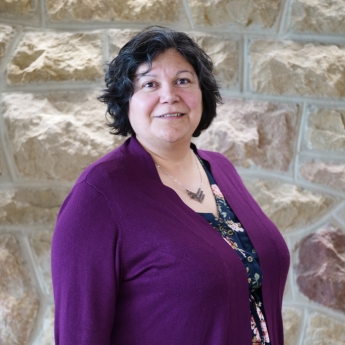
Indigenous Programs Coordinator, University of Saskatchewan
Shirley Cardinal
Shirley Cardinal is a nēhiyaw from Waterhen Lake First Nation, Treaty Six territory. Fluent in nēhiyawēwin, she cherishes her language and cultural roots. With 30 years in education, she has served as a middle and high school teacher and a language revitalization coordinator for nine First Nation schools. Currently, Shirley is the Indigenous Programs Coordinator at the University of Saskatchewan’s College of Education, supporting the Indigenous Language Certificate and the Master of Land-Based Education. Shirley earned her Master of Indigenous Languages Education in 2022.
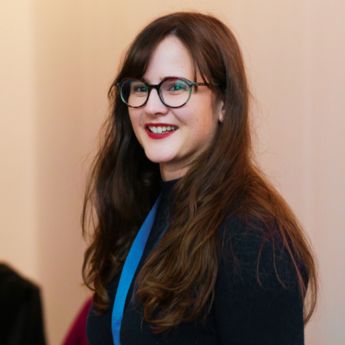
Graduate Student, McGill University, and CEGEP English Teacher
Charlotte Crober
Charlotte Crober is a master’s student in Second Language Education at McGill University and an English teacher at the Cégep de Saint-Jérôme. Her interest in languages began at York University’s Glendon College where she obtained a bilingual honours degree in sociology. She has worked in second-language education for six years in Quebec, France, and Alberta, using game-based approaches. Her board game Plume: Purrfectly Fluent gained $7500 in grant funding from The Future Design School and Chantiers Jeunesse.

Teacher-Librarian & Course Director/Practicum Facilitator
Karen Devonish-Mazzotta
Karen Devonish-Mazzotta has been teaching French as a second language (FSL) with the Toronto District School Board (TDSB) for almost 30 years. She has an M.A. in Second Language Learning from the University of Toronto. As a reviewer for the Ontario Ministry of Education, Karen has conducted equity and bias checks for several curriculum documents in both English and French. She also an active schedule as an Additional Qualifications instructor for various providers in Ontario. Karen is currently a teacher-librarian with the TDSB and a course director/practicum facilitator with the FSL Teacher Candidate cohort at York University’s Faculty of Education.
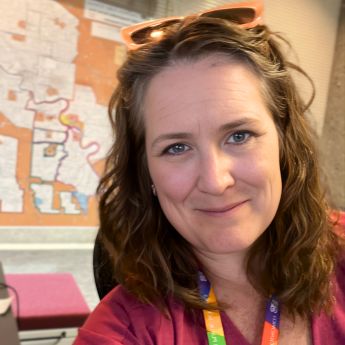
Program Coordinator, Edmonton Public Schools
Stephanie Jackson
Stephanie Jackson began her career as a junior high teacher of French as an Additional Language at Edmonton Public Schools (EPSB) and transitioned to central leadership as a consultant and program coordinator. In these roles, Stephanie worked to support local, provincial, national, and international educators and administrators in additional language and immersion programs. With a passion for educational technology and language learning, Stephanie helps teachers to see the potential for enriching their classrooms through technology integration and inclusive teaching practices. She is often asked to present on the topics of effective language teaching and assessment, technology integration, and leadership development. She has been a contributor, author, and/or project coordinator for many teacher and student resources through her work with EPSB and her volunteer role as Vice President of the Additional Languages and Intercultural Council of the Alberta Teachers’ Association.
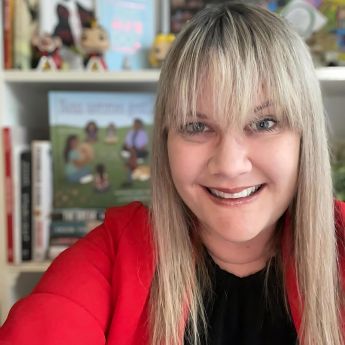
Coordinator of French Programs, Mission Public Schools
Shauna Néro
Shauna Néro is the coordinator of French programs for Mission Public Schools, the Network of French Program Administrators and Teachers of the Lower Mainland and Vancouver Island, and the Centre DELF scolaire of British Columbia. She also works provincially and nationally as a French education consultant for Famille Néro Consulting. Shauna has extensive experience teaching French, social studies, and Core French at the intermediate and secondary levels. She also teaches methodology courses for future teachers at Simon Fraser University and previously worked as a vice-principal of a dual-track French immersion elementary school. Her teaching practice applies a multilingual/multicultural approach within a universal design for learning framework, focusing on creating authentic, action-oriented learning experiences. Shauna’s goal is to help students become autonomous, confident communicators in French who can use their intercultural skills with openness, curiosity, and engagement.

Executive Director (AQEFLS), Provincial Pedagogical Consultant and Strategic Initiatives and Partnerships Consultant (LEARN)
Marc-Albert Paquette
Marc-Albert Paquette has been actively involved in education for over 20 years. Currently, he is the provincial French as a second language pedagogical consultant and strategic initiatives and partnerships consultant for Leading English Education and Resource Network (LEARN) as well as Executive Director of the Association québécoise pour l’enseignement du français langue seconde (AQEFLS). Marc-Albert served as president of the Canadian Association of Immersion Professionals (ACPI) and the North American Commission of the Fédération internationale des professeurs de français (FIPF). He is particularly interested in pedagogical approaches that promote the development of linguistic security, especially in relation to assessment for learning, oral interaction and plurilingual and pluricultural competence.
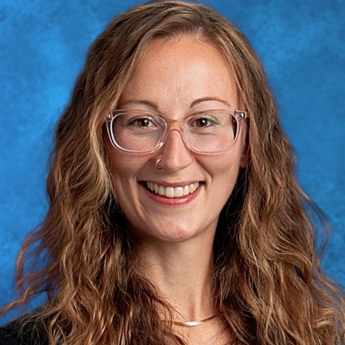
Assistant Professor, St. Thomas University
Gemma Porter
Gemma Porter is an immigrant from Bristol, UK raised on the traditional, unceded territory of the Anishinaabe (Eastern Ontario). She has lived and worked in Ontario, Saskatchewan, Nova Scotia, and New Brunswick. Currently, she is an assistant professor in the School of Education at St. Thomas University, which is situated on the traditional and unceded territory of the Wolastoqey (Fredericton, New Brunswick). Before making the transition to teacher education in 2021, Gemma worked as a middle and high school social studies and Indigenous studies teacher. Her current research and practice interests are focused on developing teacher education programming that supports decolonization and education for the common good.
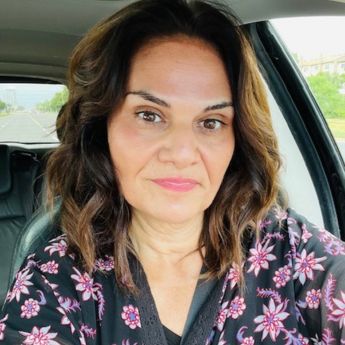
Course Director and Practicum Supervisor, York University’s Faculty of Education
Cécile Robertson
Cécile Robertson is an experienced FSL teacher, researcher, administrator, and learning coach. She is passionate about language learning in the context of culturally relevant pedagogy and is inspired by the works of Gloria Ladson Billings. Cécile has presented for the Toronto District School Board (TDSB), the Ontario Modern Language Teachers’ Association (OMLTA), the Canadian Association of Immersion Professionals (ACPI), and the Faculty of Education at the University of Ottawa. She has also taken part in research projects on FSL teacher retention at York University. A retired principal for one of Ontario’s Francophone school boards, Cécile currently teaches at York University’s Faculty of Education and supervises teacher candidates as a practicum supervisor. As a lifelong learner, she enjoys meeting FSL and Francophone educators looking for innovative approaches that engage and motivate students.

Assistant Professor, University of British Columbia
Carl Ruest
Carl Ruest (he/him) is an assistant professor in French education and French teacher training at the University of British Columbia (UBC), located on the territory of the Musqueam people. His projects aim, among other things, to help teachers adopt a critical intercultural orientation in language teaching. Before joining UBC as an assistant professor, Carl was a high school French immersion teacher.

Lecturer, Simon Fraser University
Monica Tang
For 20 years, Monica Tang has been involved in French teaching and the French immersion program at various levels. She currently teaches in the Faculty of Education at Simon Fraser University (SFU). As part of her doctoral research on the bilingual identity of French teachers in British Columbia, she created a new course for pre-service teachers that supports them in their linguistic identity. She also developed a series of pedagogical resources for teachers to support the development of a positive bilingual identity. From kindergarten to graduate school, she seeks to help teachers and plurilingual students progress and find joy in language learning. Monica was also interviewed by CASLT as part of the Languages Build video series.